I'll be straight with you: I'm picky about slant boards. Most of them are either too flimsy to trust under a loaded barbell, or they're a single fixed angle that's great for one thing and useless for the next. The V-Stack solved both problems in a way that actually made me rethink how I program ankle and knee work for clients.
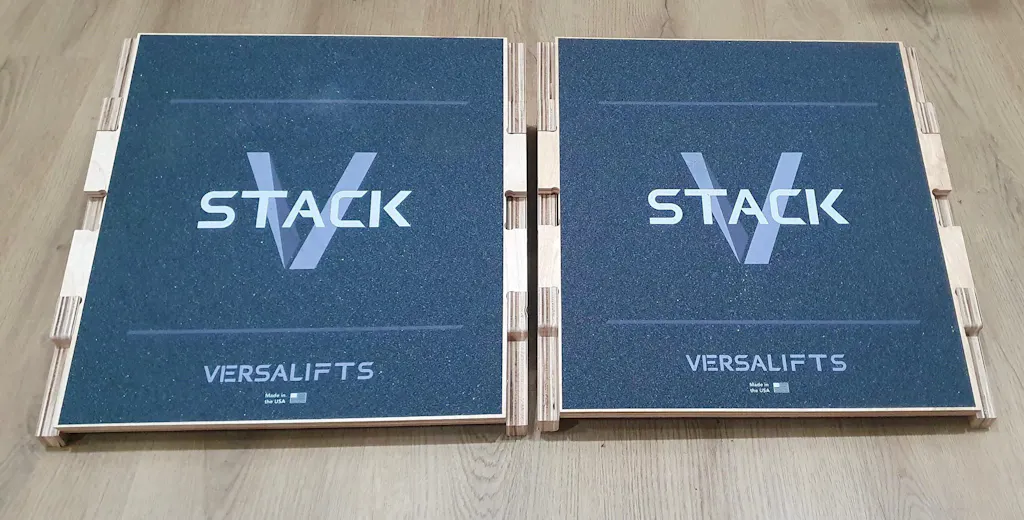
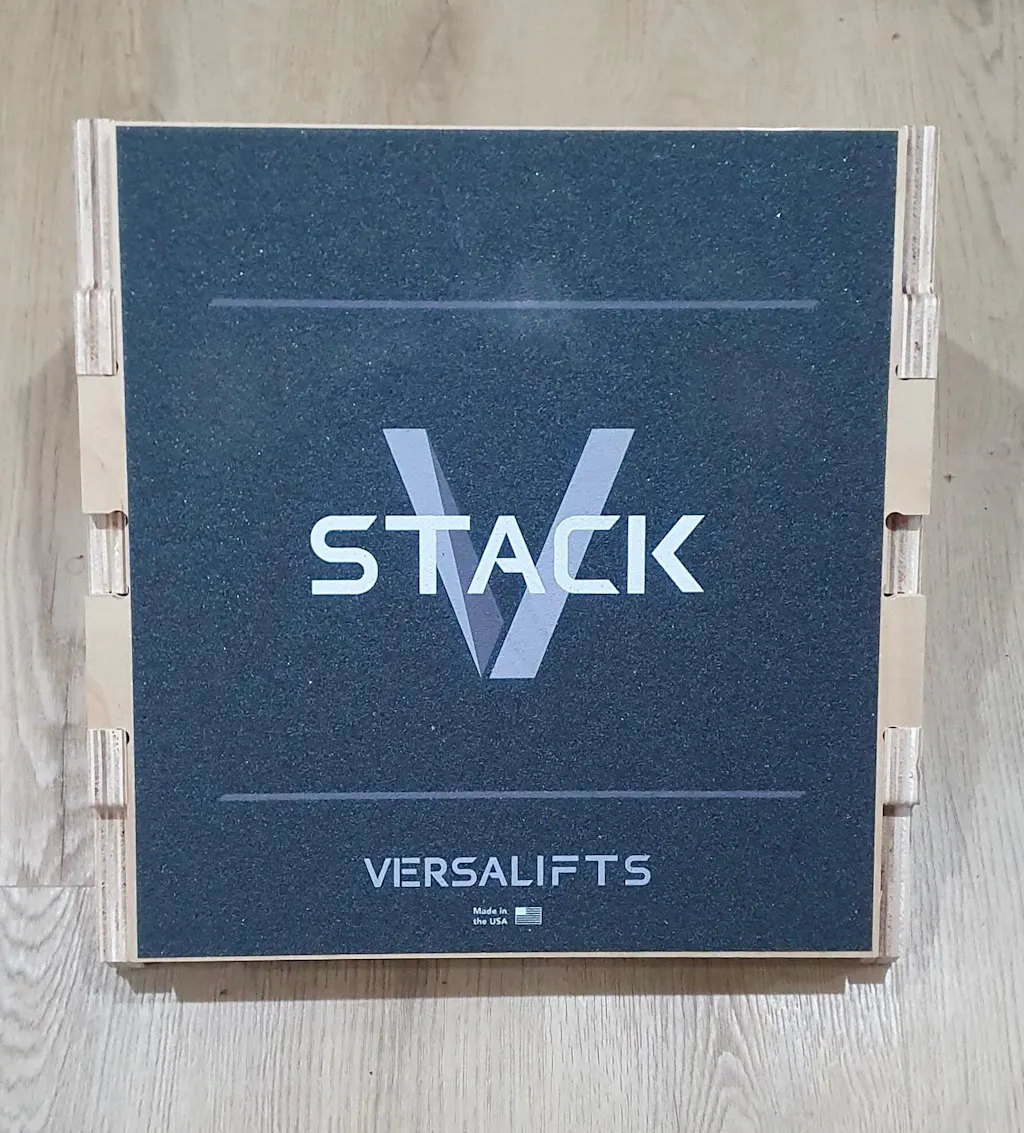
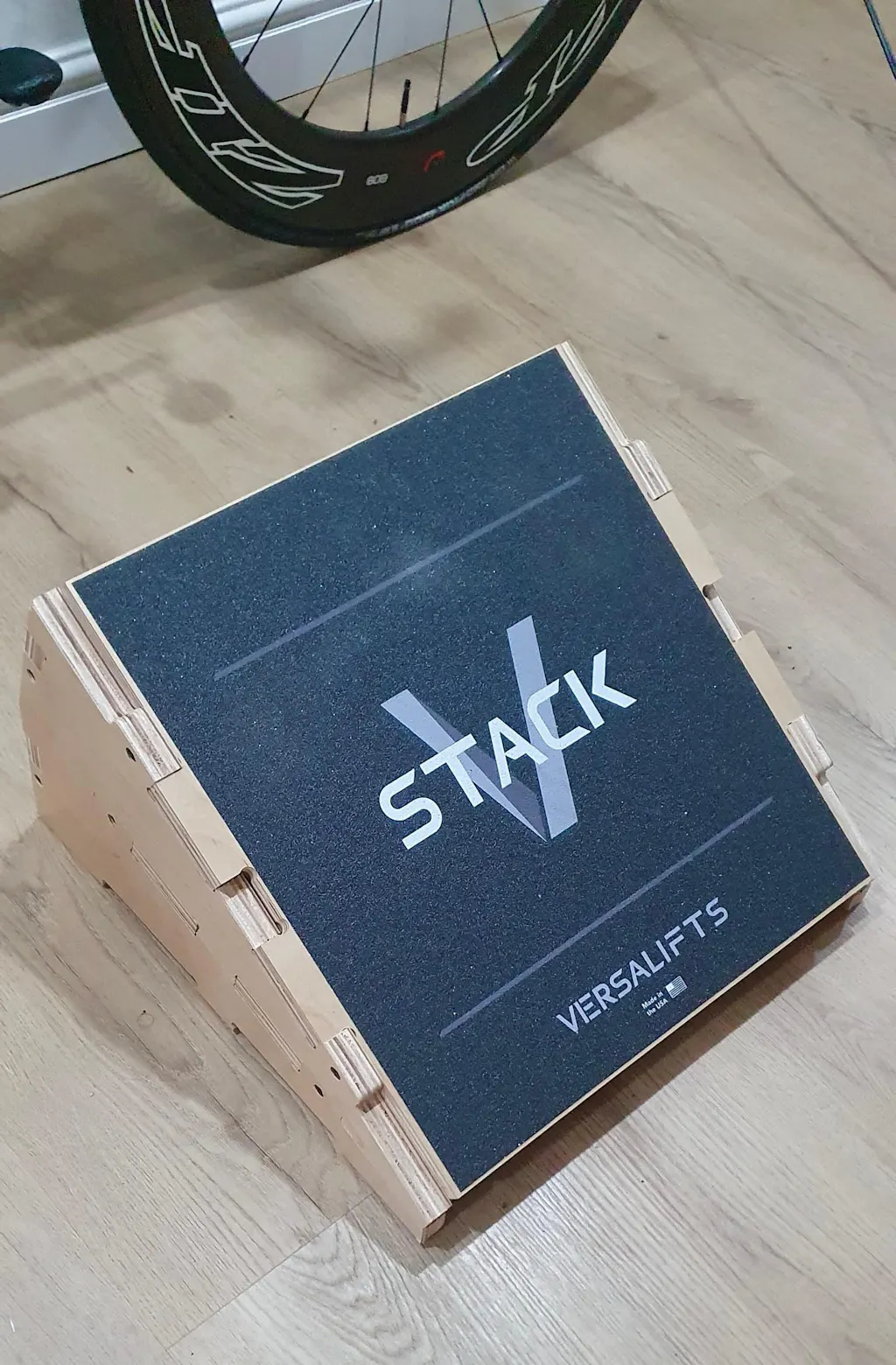
Two boards, each measuring about 15.5 by 15.25 inches with a 5.25-inch rise, built from three-quarter-inch plywood with a grip-tape surface. The clever part is the stacking design — you can set them up to go from a 15-degree slant to a steeper 30-degree slant, and you can also flip the orientation entirely so they function as a flat step-up platform or a deficit push-up and handstand push-up platform if you own two sets.
Most slant boards force you to pick your angle when you buy and live with it forever. This one doesn't. Early in a knee or ankle rehab progression, I want a gentler 15-degree angle so a client can ease into ankle dorsiflexion without compensating through the lower back. As mobility improves, I stack the second board and bump it to 30 degrees for a much deeper loaded stretch — same piece of equipment, completely different training stimulus. For anyone managing tight calves, post-injury ankle stiffness, or just trying to squat with better depth without their heels lifting, having both angles available without buying two separate boards is genuinely useful.
The build quality matters too. Plywood sounds basic on paper, but it's the right call — it doesn't have the give or wobble you get with cheaper compressed-foam boards. Loaded squats on this thing feel stable, not springy. The grip tape does its job; I haven't had a client's foot slide on it, even mid-session when sweaty.
It's not the quietest piece of equipment — plywood on a hard floor transmits some thud under load — and it's bulkier in storage than a thin foam wedge. If you only ever need one fixed angle, you're paying a bit of a premium for the versatility you might not use.
For anyone doing serious lower-body training, or for a trainer who needs a single tool that adapts across a client's entire rehab-to-performance arc, this earns its spot in the gym. Recommend without hesitation for ankle mobility work, deep squat patterning, and lower-leg prehab/rehab.